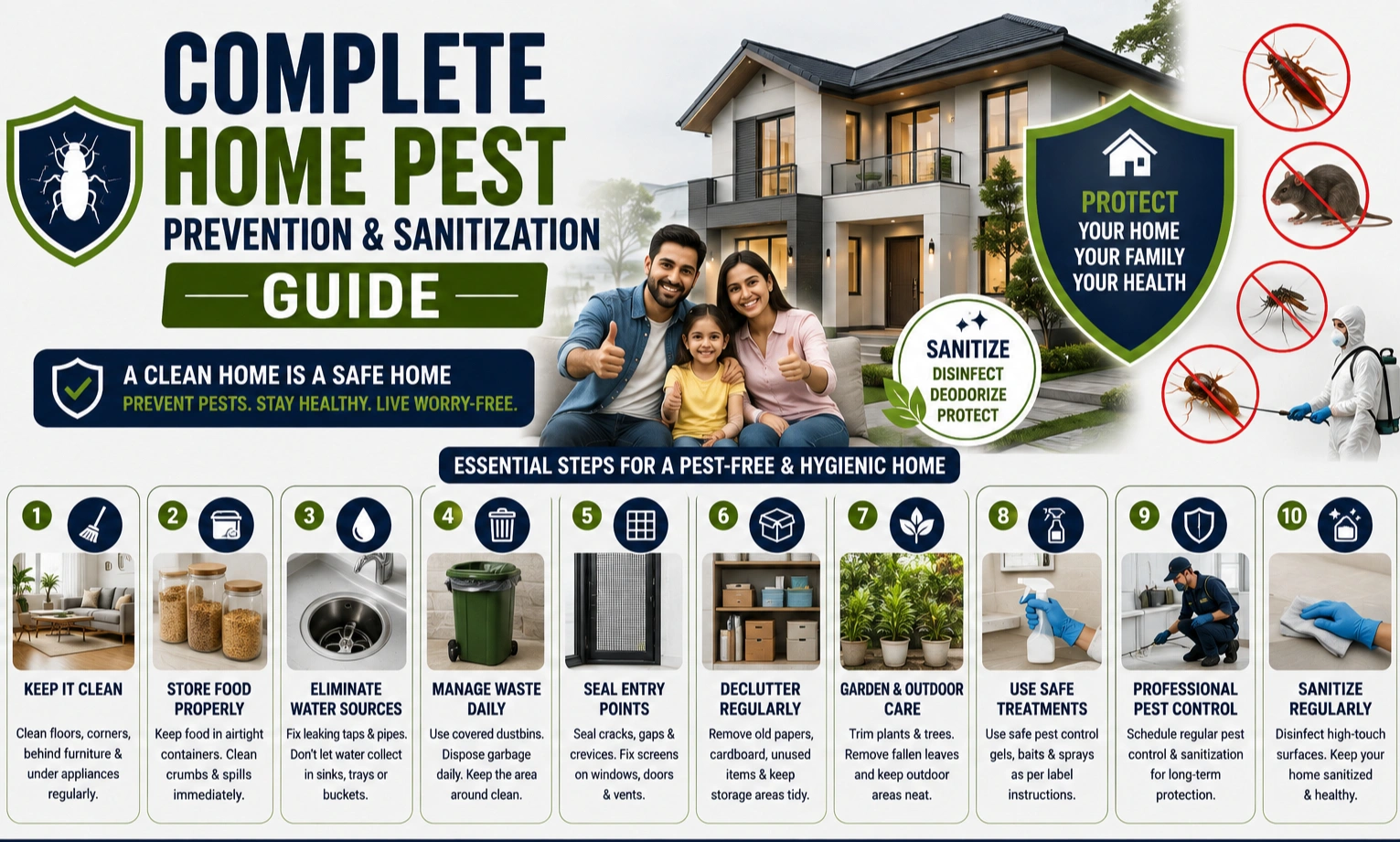
A clean and healthy home needs more than regular dusting. Good pest prevention, proper hygiene, moisture control and routine sanitization can help reduce unwanted insects and create a cleaner, more comfortable living environment.
Household pests are often attracted by three basic things: food, water and places to hide. Small issues such as uncovered food, leaking pipes, overflowing bins or cluttered storage can gradually create conditions that pests find suitable.
The best approach is prevention combined with regular cleaning and sanitization. If pest activity continues despite good housekeeping, professional pest control can help identify hidden harbourage areas and provide a suitable treatment plan.
Kitchens are among the most important areas for pest prevention because food particles, grease and moisture can attract insects. Wipe counters after use, clean spills promptly, wash dishes regularly and avoid leaving food uncovered. Pay attention to areas under appliances and inside cabinets where crumbs can collect.
Keep grains, flour, snacks, cereals, pet food and other dry foods in clean, tightly sealed containers. Check food packets before storing them and clean shelves regularly. Proper food storage reduces easy access to food and helps keep cupboards more hygienic.
Damp areas can encourage pest activity. Check under sinks, around bathroom fixtures, near washing machines and around pipes for leaks or standing water. Repair plumbing problems promptly and keep wet surfaces dry whenever possible. Good ventilation can also help reduce unnecessary moisture inside the home.
Empty kitchen waste regularly and use bins with secure lids. Clean the inside and outside of bins when necessary and avoid allowing food waste to remain overnight. Keeping waste areas clean can reduce odours and remove potential food sources for unwanted pests.
Inspect gaps around doors, windows, pipes, drains and wall openings. Sealing accessible cracks and improving door and window gaps can reduce opportunities for insects to enter the property. Also keep drain covers and other openings properly maintained.
Excess cardboard, old newspapers, unused items and clutter can create hiding places for pests. Organise storage areas, clean beneath furniture and keep rarely used spaces accessible for inspection. A tidy home makes it easier to notice pest activity early.
Regular cleaning of frequently touched surfaces such as kitchen handles, switches, tables, countertops and bathroom surfaces supports overall household hygiene. Sanitization should be part of a broader cleaning routine rather than a replacement for proper pest prevention.
Check under sinks, behind refrigerators, around drains, inside cabinets, near plumbing and in storage rooms. Look for droppings, insects, damaged materials, unusual odours or other signs of pest activity. Early detection can help prevent a small issue from becoming a larger infestation.
Pest control and sanitization serve different purposes. Pest control focuses on identifying and managing unwanted pests, while cleaning and sanitization help maintain hygienic surfaces and remove residues, food particles and other conditions that can contribute to poor cleanliness.
After any pest-control treatment, follow the service provider's instructions about cleaning, ventilation, food storage and re-entry. This helps maintain the treated area appropriately and supports a consistent hygiene routine.
If you regularly see cockroaches, ants, termites, bed bugs, rodents or other pests despite good housekeeping, the problem may involve hidden harbourage areas or entry points. Professional inspection can help identify the source of recurring activity and determine an appropriate treatment approach.
Prevention works best when cleaning, moisture control, proper storage and professional pest management are combined. If pest problems keep returning, consider a professional inspection from Super Scan India.
Contact Super Scan India